
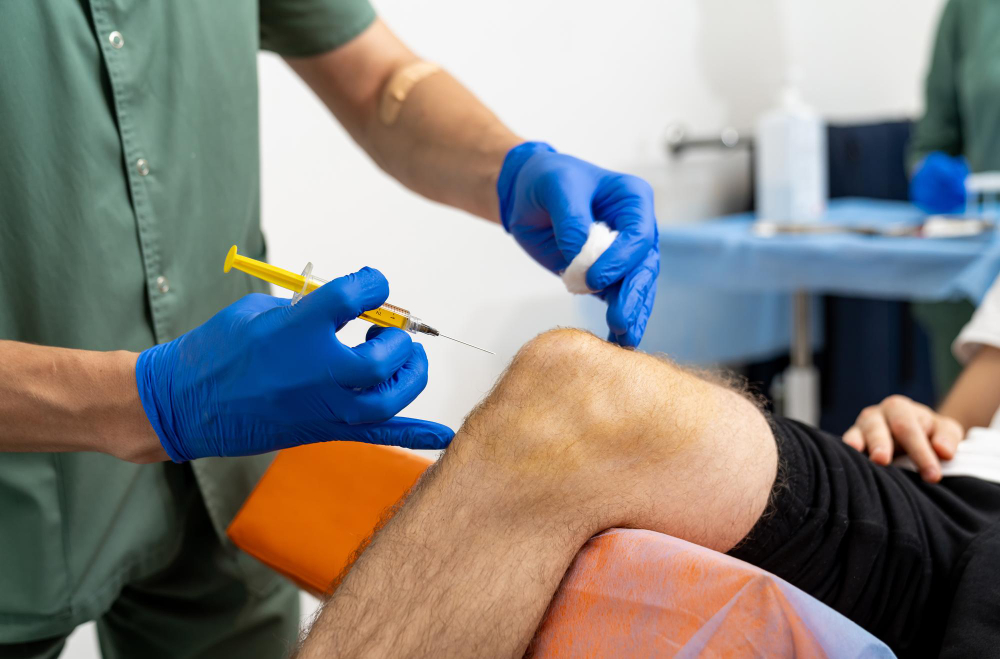
Joint Injections in Dallas, TX
Targeted relief for knee, shoulder, hip, and other joint pain — delivered in-office by a physician who already knows your full medical history.
Joint Injections at Our Practice
Joint pain has a way of narrowing your life without announcing itself. Stairs become something you plan for. A round of golf turns into nine holes, then none. Sleep gets interrupted by a shoulder that won't settle. For many adults in Dallas, that decline happens gradually enough that it starts to feel normal.
Joint injections offer a way to interrupt that pattern. By delivering medication directly into the affected joint, we can reduce inflammation at its source — often providing relief that oral medications alone cannot achieve, and doing so without surgery or extended recovery time.
Dr. James Race performs these injections in the office as part of ongoing primary care. That distinction matters. Your injection is planned around the medications you already take, the conditions you already manage, and the goals you've already discussed — not in isolation from them.
What Are Joint Injections?
A joint injection places medication directly into or around an affected joint. Because the medication reaches the problem area concentrated rather than diluted through the bloodstream, relief is often faster and requires a lower overall dose than oral treatment.
Corticosteroid Injections
The most commonly used option. A steroid medication reduces inflammation inside the joint, easing pain and stiffness. Relief typically begins within a few days and can last several weeks to months.
Hyaluronic Acid Injections
Sometimes called viscosupplementation. This gel-like substance supplements the natural fluid that cushions the joint, most often used in knees affected by osteoarthritis.
Trigger Point Injections
Directed at tight, painful knots in muscle rather than the joint itself. Useful when muscle tension around a joint is contributing to the pain you feel.
Diagnostic Injections
A numbing medication placed in a specific joint to confirm where pain is actually originating. If the pain stops, we've identified the source and can plan treatment accordingly.
Bursa Injections
Targeted at an inflamed bursa — the small fluid-filled sac that cushions bone and soft tissue. Common at the shoulder, hip, and elbow when movement produces sharp, localized pain.
Joint Aspiration
Removing excess fluid from a swollen joint. This relieves pressure immediately and allows the fluid to be examined when the cause of the swelling is unclear.
Conditions We Treat With Joint Injections
Joint injections are considered when pain persists despite rest, activity changes, physical therapy, or oral anti-inflammatories. They're frequently used alongside those measures rather than in place of them. Common reasons patients come to us include:
- Osteoarthritis of the knee, hip, shoulder, or hand
- Rheumatoid arthritis and other inflammatory joint disease
- Bursitis at the shoulder, hip, knee, or elbow
- Tendonitis and rotator cuff irritation
- Gout and crystal-related joint flares
- Frozen shoulder and limited range of motion
- Plantar fasciitis and persistent heel pain
- Carpal tunnel syndrome with wrist and hand symptoms
What to Expect During Your Appointment
Most joint injections take only a few minutes and are completed during a standard office visit. Knowing the sequence ahead of time tends to make the appointment easier.
Evaluation and Discussion
Dr. Race examines the joint, reviews your imaging and history, and confirms an injection is the right next step. This is the point to raise questions about blood thinners, diabetes, allergies, or anything else that may affect the plan.
Positioning and Preparation
You'll be positioned so the joint is accessible and relaxed. The skin is cleaned thoroughly, and a numbing agent — either a topical spray or a small local anesthetic — is applied to minimize discomfort.
The Injection
Using anatomical landmarks, the medication is placed precisely into the joint space or surrounding tissue. Most patients describe brief pressure rather than sharp pain. The injection itself usually takes under a minute.
Brief Observation
You'll rest for a short period so we can confirm there's no immediate reaction. A bandage is applied, and in most cases you're able to drive yourself home afterward.
Aftercare and Follow-Up
We'll go over activity limits for the next day or two, what mild soreness is normal, and when to expect relief to begin. A follow-up is scheduled to assess how well the injection worked and whether repeat treatment makes sense.
A note on timing: corticosteroid injections often produce a short flare of soreness in the first 24 to 48 hours before relief sets in. This is expected and not a sign the injection failed.
Why Choose James Race, MD for Joint Injections?
You can get an injection in a number of places around Dallas. What differs here is who is holding the rest of your medical picture while it happens.
Treated by Your Own Physician
Dr. Race already knows your history, your medications, and your other conditions. That context shapes which injection is chosen and how it's timed — something a first-time provider simply cannot account for.
Performed In Office
No outside referral, no separate facility, no waiting weeks for a specialist opening. The injection happens in the same office where you receive the rest of your care.
Careful Medication Review
Steroids can raise blood sugar, and blood thinners change how an injection is approached. Because your full medication list is already on file, these interactions are addressed before the needle comes out.
Part of a Larger Plan
An injection buys a window of relief. We use that window deliberately — for physical therapy, weight management, or activity changes that extend how long the benefit lasts.
Straightforward Explanations
You'll leave knowing what was injected, why that option was chosen, what to expect over the next 48 hours, and when to call if something doesn't feel right.
Convenient Dallas Location
Serving Oak Cliff, Bishop Arts, Kessler Park, Duncanville, DeSoto, and the surrounding communities — close enough that follow-up visits stay easy to keep.
Recovery and Results
Recovery from a joint injection is usually brief. Most patients return to their normal routine the same day, with a short period of reduced activity while the medication takes effect.
Mild Soreness
Tenderness at the injection site is common. Ice and rest help. Avoid heavy lifting and high-impact activity during this window.
Relief Begins
Corticosteroid relief typically sets in during this range. Hyaluronic acid works more gradually and may take a few weeks.
How Long It Lasts
Duration varies with the joint, the condition, and how advanced it is. Several weeks to several months is realistic for most patients.
Repeat Injections
Steroid injections are generally spaced at least three months apart and limited per joint each year to protect the cartilage.
If pain returns sooner than expected, or the injection produces little benefit, that information still matters. It helps determine whether a different injection type, further imaging, or an orthopedic referral is the better next step.
We Answer Your Questions, So You Don't Have To Wonder
Patients considering a joint injection usually have the same handful of concerns. Here are straightforward answers to the ones we hear most often in our Dallas office.

Most patients describe brief pressure rather than sharp pain. The skin is numbed beforehand, and the injection itself usually takes less than a minute. Some soreness in the following day or two is normal and typically responds to ice.
Corticosteroid injections generally begin working within two to seven days. Hyaluronic acid injections act more gradually and may take several weeks before the improvement is clear.
If a numbing agent was included, you may notice a few hours of relief immediately after the appointment before it wears off. That's temporary and separate from the medication's real effect.
It varies considerably. Some patients get several weeks, others several months. The joint involved, the underlying condition, and how advanced the wear is all factor in. Pairing the injection with physical therapy or activity changes tends to extend the benefit.
Corticosteroid injections are usually spaced at least three months apart, with a limit on how many a single joint receives per year. Repeated steroid exposure can affect cartilage over time, so we track the count carefully and discuss alternatives when the limit approaches.
Corticosteroids can raise blood glucose for several days after the injection. If you have diabetes, let us know beforehand so we can plan for closer monitoring and, if needed, consider a non-steroid option instead.
In most cases, yes. Joint injections don't require sedation, so patients typically drive themselves home. If a large weight-bearing joint was treated and you feel unsteady, arranging a ride is the safer choice.
That result is still useful information. It may point to a different source of pain, a need for further imaging, or a condition better addressed surgically. We'll reassess at your follow-up and discuss whether a different injection type or an orthopedic referral makes more sense.
No referral is needed to schedule with our office. Coverage requirements vary by insurance plan, so it's worth confirming with your carrier — our staff can help you sort that out when you call.
Feedback
What Our Patients Talk About Our Services
.png)
Proudly Serving the Communities of Dallas, Texas
Do not see your neighborhood listed? We welcome patients from across the DFW metroplex — call (214) 467-3832 to schedule.
Have a Question or Need to Schedule a Visit?
.png)
Our practice is here to support your healthcare needs. If you have questions about services, need to schedule an appointment, or would like to speak with our team.

2909 S Hampton RoadSuite D107Dallas, TX 75224

%201.png)